Menu
Same-Day Service Available!
Family furniture works hard.
The couch becomes a movie-night headquarters, an afternoon snack spot, a homework station, a place for pets to nap, and sometimes even a temporary bed when someone falls asleep watching television. Dining chairs catch crumbs and spills. Accent chairs collect dust. Ottomans become footrests, tables, pet beds, and toy storage areas all at once.
Because upholstered furniture gets so much everyday use, it can start looking tired surprisingly quickly. Crumbs work their way between cushions. Dust settles into fabric fibers. Skin oils collect along armrests. Pet hair gathers in seams. Small spills leave marks, and odors can slowly build without one obvious source.
Fortunately, upholstery cleaning does not always require a long weekend or a cabinet full of specialty products.
Busy families can handle a surprising amount of routine upholstery care with a few simple habits. The key is knowing what to clean, how to clean it safely, and when a problem has moved beyond what a quick DIY solution can reasonably handle.
For homeowners in Goodlettsville, Tennessee, 37072, regular furniture maintenance can be especially useful when children, pets, guests, and everyday family activity keep couches and chairs in constant use. A little attention throughout the week can prevent small messes from turning into bigger cleaning projects.
However, DIY cleaning also has limits. Upholstery fabrics vary widely, and using too much water, aggressive scrubbing, or the wrong cleaning solution can make a stain worse.
This guide explains easy upholstery cleaning hacks for busy families, what causes furniture to look dirty in the first place, how to tackle common everyday messes, and when professional help may be the better choice.

Upholstery does not usually become dirty because of one dramatic accident. Most of the time, the change happens slowly.
Each time someone sits on a couch, tiny amounts of body oil, skin particles, dust, and hair can transfer to the fabric. Children may leave crumbs behind after snacks. Pets bring in hair, dander, and particles from outside. Open windows can allow pollen and dust into the room. Shoes may touch the edge of an ottoman or sofa.
Eventually, all those little things add up.
High-contact areas often show wear first. Armrests may darken. The front edge of a cushion can look duller than the back. A favorite seat may appear slightly different from cushions that are rarely used.
Humidity and moisture can also make matters more complicated. A spilled drink that is only partially blotted may travel deeper into a cushion. If too much cleaning solution is applied later, drying can take longer and odors may become more noticeable.
This is one reason a simple upholstery cleaning routine can be more effective than waiting until the furniture looks obviously dirty.
Preventive care usually takes less effort than trying to restore heavily soiled upholstery all at once.
Before trying any upholstery cleaning hack you find online, check the furniture manufacturer’s care instructions.
Look beneath the cushions, underneath the furniture, or along the frame for a care tag. Different upholstery materials require different treatment. Some fabrics tolerate limited moisture, while others may require solvent-based care or professional attention.
Never assume that a cleaning method that worked on one couch will work on another.
A microfiber sectional, cotton-blend chair, velvet sofa, wool upholstery, and synthetic dining chair can all react differently to moisture and cleaning products.
When instructions are available, follow them carefully.
If you cannot find the manufacturer’s directions, test any cleaning method on a small, hidden area before treating a visible section.
For example, test behind the couch, underneath a cushion, or near the bottom edge of the furniture. Allow the test spot to dry completely before deciding whether the method is safe.
Look for changes in color, texture, softness, or finish.
Testing takes a little extra time, but it may save you from creating a much larger problem.
One of the easiest upholstery cleaning hacks is also one of the most overlooked: vacuum first.
Dry soil should generally be removed before moisture enters the picture.
If you immediately spray cleaning solution onto a dusty couch, loose soil can combine with the moisture and become harder to remove. Vacuuming first gives you a cleaner starting point.
Remove loose cushions if possible. Use an upholstery attachment to vacuum the seat, back, arms, and cushions.
Next, use a crevice attachment along seams, folds, corners, and underneath cushions.
Those narrow spaces often hold far more than homeowners expect. Crumbs, pet hair, dust, coins, small toys, and other debris can accumulate there for months.
Move slowly rather than making quick passes. Give the vacuum enough time to pull particles from the fabric.
The U.S. Environmental Protection Agency also recommends routinely vacuuming carpets and fabric-covered furniture as part of ordinary indoor cleaning.
For busy households, a complete vacuuming every week or two can help furniture stay cleaner without requiring a major cleaning session.
Homes with shedding pets may benefit from more frequent attention.
Dragging out the vacuum cleaner is not always practical when guests are arriving in ten minutes.
A lint roller can be a useful backup.
Run it over cushions, chair backs, and other areas where loose hair collects. It works especially well for quick surface cleanup between deeper upholstery cleaning sessions.
For stubborn pet hair, slightly damp rubber gloves can sometimes help gather loose hair from suitable fabrics. Run your hand lightly across the surface rather than rubbing aggressively.
However, remember that removing visible pet hair does not remove deeper pet-related odor or contamination.
If a dog or cat has had an accident on upholstered furniture, the liquid may have traveled deeper into foam or padding. Surface cleaning alone may not solve the issue.
Safe-Dry® of Goodlettsville provides professional pet stain and odor treatment for carpets, rugs, and upholstery when household methods are no longer enough. Goodlettsville pet odor and stain removal services
Someone spills juice on the couch.
The natural reaction is often to grab a towel and start rubbing.
Resist that urge.
Aggressive scrubbing can spread a spill outward, work it deeper into the fabric, or disturb the texture of the upholstery.
Instead, blot.
Use a clean, absorbent white cloth or plain paper towel. Press gently onto the spill and lift straight upward.
Continue using dry areas of the cloth until you are no longer picking up much moisture.
Working from the outside edge of the spill toward the center can also help prevent spreading.
Speed matters. The sooner you address a fresh spill, the easier it may be to manage.
However, avoid soaking the area with water afterward. More liquid does not automatically equal better upholstery cleaning.
In fact, excess moisture can push contamination deeper into the cushion.
One reason spills become stains is simple: nobody wants to search through three cabinets for cleaning supplies while a drink is soaking into the couch.
Create a small cleanup kit and keep it somewhere convenient.
It might include clean white microfiber cloths, plain paper towels, a soft upholstery brush if appropriate for your fabric, disposable gloves, and whatever upholstery-safe cleaning product your furniture manufacturer recommends.
Keeping these supplies together makes it easier to respond quickly.
Families with younger children may want one kit near the family room and another near a frequently used dining area.
Make sure all cleaning products remain safely stored away from children and pets.
EPA guidance recommends reading product labels carefully, preparing products at the correct strength, increasing ventilation where appropriate, and never mixing household cleaning products together.
Convenience should never come at the expense of safe handling.
Baking soda is often suggested as a household odor-control option.
For some compatible upholstery, a light application may help absorb mild surface odors.
First, make sure your furniture manufacturer allows it.
Then vacuum the furniture thoroughly.
Sprinkle a very light layer of baking soda over the affected surface rather than covering the couch with a thick coating.
Allow it to sit for a period of time, then vacuum carefully.
This approach may help with ordinary stale odors, but it should not be viewed as a replacement for professional odor elimination when the odor comes from urine, deep spills, smoke contamination, or moisture inside the furniture.
Odor problems are often deeper than what you smell at the surface.
A pet odor eliminator applied only to the visible fabric, for example, may temporarily improve the smell while leaving contamination deeper in the cushion.
The same principle applies when homeowners try to remove pet smell from carpet. Pet urine removal and pet odor removal often work best when the actual source is treated rather than covered with fragrance.
Upholstery cleaning is not only about removing stains.
It is also about helping furniture age more evenly.
If your couch has removable or reversible cushions, rotate them regularly.
Switch heavily used cushions with less-used ones. Flip reversible cushions. Move back cushions when their design allows it.
One family member may always sit in exactly the same spot. Over time, that cushion receives far more friction, skin oils, crumbs, and pressure than the others.
Rotating cushions distributes everyday wear more evenly.
After rotating, give cushions a quick vacuum.
This simple routine takes only a few minutes, yet it can help the entire couch maintain a more consistent appearance.
Here is an easy way to make upholstery cleaning feel less like another chore: attach it to something you already do.
Whenever you vacuum the living room carpet, lift the sofa cushions before putting the vacuum away.
You do not need to perform a full furniture cleaning every time.
Simply remove visible crumbs and debris from underneath the cushions.
This habit prevents debris from accumulating for months and makes deeper cleaning easier later.
It also pairs naturally with regular carpet cleaning maintenance.
Carpet and upholstery tend to collect many of the same household contaminants, including hair, soil, dust, food particles, and pet debris. Maintaining them together helps the entire room feel cleaner.
If the floor needs more attention than routine vacuuming can provide, professional carpet cleaning may help address soil deeper in the carpet fibers.
Safe-Dry® serves Goodlettsville households with carpet cleaning and other textile cleaning services alongside upholstery and rug care. Safe-Dry carpet cleaning in Goodlettsville, Tennessee
More cleaner does not necessarily mean more cleaning power.
One of the most common DIY upholstery cleaning mistakes is oversaturating the fabric.
Homeowners may spray an area repeatedly because a stain is not disappearing immediately. Unfortunately, the extra liquid can travel into cushion foam and take much longer to dry.
Cleaning product residue may also remain behind.
When using an approved upholstery product, follow the label directions carefully.
Do not increase the concentration simply because the stain looks difficult.
EPA guidance specifically recommends following label instructions and using products at their intended dilution.
Whenever possible, apply a small amount to a clean cloth rather than pouring or heavily spraying cleaner directly onto furniture.
Then blot the problem area gently.
Patience usually works better than saturation.
Why white?
Because colored towels can potentially transfer dye, especially when they become wet and are rubbed against another material.
White cloths also make it easier to see what you are removing from the furniture.
If the stain is transferring to your cloth, you can monitor your progress.
Rotate the cloth frequently so you are always blotting with a clean section rather than pressing soil back into the upholstery.
This is a small upholstery cleaning detail, but small details often create better results.
Family rooms and snacks tend to go together.
Unfortunately, food often contains oils, sugars, dyes, proteins, or other ingredients that can become more challenging once they dry.
When food lands on upholstered furniture, remove solid material gently with a spoon or another dull-edged tool.
Avoid grinding the mess into the fibers.
Blot any remaining moisture.
Then follow the furniture manufacturer’s recommended treatment for that fabric.
Do not experiment with multiple household chemicals one after another.
If the stain remains after a careful attempt, stop before repeated treatments create discoloration or residue.
Professional stain removal service may be worthwhile for larger, older, or highly visible stains.
A room spray can make a living room smell pleasant.
That does not mean the couch is clean.
Strong fragrance may temporarily cover an upholstery odor without removing its source.
Instead, identify what may be causing the smell.
Is there food underneath a cushion?
Does the furniture need vacuuming?
Did a pet have an accident?
Was a drink spilled several days ago?
Is the room humid?
Did someone clean the couch recently and leave too much moisture behind?
Odor elimination becomes much easier when you know what you are trying to eliminate.
Professional carpet odor removal works under the same principle. Effective carpet deodorizing or urine odor removal should target the source instead of relying only on fragrance.
The same is true for upholstery.
After treating a spot, give the furniture time to dry.
Increase airflow when appropriate. A ceiling fan or room fan may help, provided doing so does not conflict with the product instructions.
EPA recommends increasing ventilation during and after the use of many household cleaning products.
Avoid immediately covering a damp cushion with a blanket.
Likewise, do not place a cushion back against another damp surface.
Allow airflow around the cleaned area.
If upholstery remains noticeably wet for an extended period, something may have been oversaturated.
Anyone with a dog knows how this goes.
You finish cleaning a couch cushion, turn around for thirty seconds, and your dog immediately decides it is the perfect place for a nap.
Keep children and pets away from freshly treated upholstery until the area is completely dry and any cleaning product instructions indicate that normal use can resume.
This reduces the chance of new dirt transferring onto damp fabric.
It also helps prevent direct contact with a product before the manufacturer considers the treated area ready for use.
Pet urine is not the same as spilled water.
It can soak through upholstery fabric and enter padding or cushion foam.
When that happens, treating only the visible surface may not resolve the problem.
Start by absorbing as much fresh moisture as possible.
Blot with clean towels. Avoid aggressively rubbing the area.
Next, follow the furniture manufacturer’s cleaning directions.
Do not repeatedly soak the cushion with water or combine multiple DIY chemical solutions.
If the smell returns after the area dries, contamination may remain deeper inside the furniture.
Professional pet stain and odor removal may then be appropriate.
The same challenge occurs with pet urine carpet cleaning. Dog urine removal and cat urine removal can be difficult because contamination may extend beyond the visible carpet fibers.
Pet accident cleaning sometimes requires treatment below the surface.
A couch may smell better immediately after cleaning and then develop an odor again a day or two later.
Several things can cause this.
First, moisture can reactivate dried urine residue deeper inside a cushion.
Second, scented cleaning products may initially overpower the smell. As the fragrance fades, the original odor becomes noticeable again.
Third, the top fabric may be cleaner while the internal padding remains contaminated.
This is why pet stain removal and pet odor removal should not be judged solely by how an area smells immediately after treatment.
Allow the furniture to dry completely.
If the odor remains or returns, avoid applying product after product.
Professional evaluation may be more effective and may reduce the risk of damaging the furniture through repeated experimentation.
Safe-Dry® of Goodlettsville provides specialized treatment for pet stains and odors on upholstery as well as carpeting and rugs.
Busy families usually do better with short routines than occasional cleaning marathons.
Set aside five minutes once a week.
Remove obvious clutter from the couch.
Shake out blankets.
Vacuum crumbs from frequently used cushions.
Use a lint roller where pet hair is visible.
Fluff pillows.
Check for fresh spots.
Rotate cushions when needed.
That is it.
You do not need to deep clean the entire sofa every Saturday.
Regular small maintenance sessions can keep upholstery looking better and help you notice spills before they become old stains.
Some cushion covers have zippers.
That does not automatically mean they belong in the washing machine.
A zipper may exist so the manufacturer can install or replace the cushion insert, not necessarily because the cover is machine washable.
Always check the care instructions first.
Washing an incompatible upholstery cover can cause shrinking, fading, distortion, or texture changes.
If the label allows washing, follow the specified temperature and drying instructions.
Do not guess.
When in doubt, professional upholstery cleaning is safer than experimenting with a removable cover from an expensive sofa.
Sometimes the couch is not actually responsible for the smell in the room.
Blankets, throw pillows, and pet bedding sitting on the furniture may be the source.
Wash removable textiles according to their care instructions.
Vacuum decorative pillows that cannot be machine washed.
Pay special attention to blankets used by pets.
Keeping these items fresh helps prevent oils, hair, and odors from transferring back onto clean upholstery.
The easiest stain to clean is the one that never reaches the couch.
Place mats near frequently used entrances.
Encourage family members to remove heavily soiled shoes.
If your dog comes inside after playing in wet grass or mud, wipe the paws before the dog climbs onto furniture.
These habits also help reduce soil on carpets and rugs.
They are particularly useful between professional carpet cleaning services because outdoor soil can otherwise spread quickly through high-traffic rooms.
Upholstery should not be viewed separately from the rest of the room.
Your couch, carpet, rugs, curtains, pet bedding, and other soft materials exist in the same environment.
Dust and pet hair move between them.
Crumbs fall from furniture onto floors.
Pets move from rugs to couches.
Shoes transfer outdoor soil into carpet.
Because of this, upholstery cleaning often works best as part of a broader home maintenance routine.
Vacuum the carpet first or immediately after cleaning furniture. Clean area rugs regularly. Dust nearby hard surfaces. Wash washable throws and pillow covers.
Homeowners interested in rug cleaning can also explore Safe-Dry® of Goodlettsville’s area rug cleaning service. The company notes that it handles everyday area rugs as well as more delicate textiles requiring specialized care. Safe-Dry Goodlettsville area rug cleaning
For valuable Oriental rug cleaning, specialty area rug cleaning, or delicate fibers, professional care is usually preferable to experimenting with household cleaning methods.
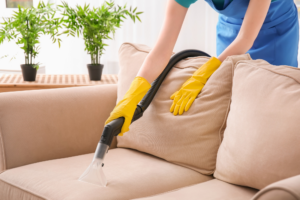
DIY care works particularly well for routine maintenance.
Vacuuming, removing crumbs, blotting fresh spills, managing loose pet hair, fluffing cushions, and addressing minor surface spots are all reasonable household tasks when the furniture care instructions allow them.
DIY cleaning also works well as maintenance between professional visits.
Think of it the same way you think about brushing your teeth between dental cleanings. Routine maintenance matters, but it does not necessarily replace periodic deeper care.
The goal is not to make every couch look factory-new with a spray bottle.
The goal is to keep daily soil under control and respond to messes before they become harder to address.
Knowing when to stop is one of the most important cleaning skills.
Repeated attempts can sometimes create more damage than the original stain.
Consider professional upholstery cleaning when you notice large stains, repeated pet accidents, persistent urine odor, unknown stains, delicate fabric, severe discoloration, widespread soil, water rings, lingering moisture, or odors that return after cleaning.
You may also want professional help when the entire couch looks dull rather than having one specific dirty area.
Trying to spot-clean ten different sections individually may create an uneven appearance.
A complete professional cleaning can provide a more consistent result.
Goodlettsville homeowners can see an example of the types of everyday buildup addressed through local upholstery care in Safe-Dry® of Goodlettsville’s upholstery cleaning customer story. Read the Goodlettsville upholstery cleaning customer story
Homeowners searching online for help do not always know which service category they need.
Someone might search for carpet cleaners near you even though the biggest problem is a pet odor in the couch. Another homeowner may search for a carpet cleaner near you while also needing rug cleaning and upholstery cleaning.
These services often overlap because carpets, rugs, and furniture experience many of the same household problems.
A professional carpet cleaning service may deal with dirt, stains, pet accidents, and odors in the flooring while upholstery cleaning addresses similar buildup on furniture.
Professional carpet cleaning can also complement a full living room refresh.
If you are considering carpet cleaning in Goodlettsville, Tennessee, ask whether your furniture or rugs could be cleaned during the same visit.
Bundling related services may be more convenient for a busy household.
Cost is understandably important for families.
However, carpet cleaning prices and upholstery cleaning prices can vary depending on the amount of material being cleaned, furniture construction, soil level, stain treatment, pet problems, fabric type, and other factors.
A small chair does not require the same work as a large sectional.
Likewise, ordinary maintenance cleaning may differ from a job involving pet urine removal or extensive stain treatment.
Rather than choosing cheap carpet cleaning or upholstery care based only on the lowest advertised number, compare the actual services being provided.
Ask what the estimate includes.
Ask whether stain treatment costs extra.
Ask whether pet stain and odor removal is separate.
Ask about drying expectations.
Ask what cleaning method will be used.
Homeowners searching for affordable carpet cleaning, carpet cleaning deals, carpet cleaning specials, or carpet cleaning coupons should still make sure the service fits their actual needs.
A carpet cleaning estimate or free carpet cleaning quote can help clarify the expected price before work begins.
Many DIY cleaning articles suggest mixtures containing vinegar, baking soda, dish soap, alcohol, hydrogen peroxide, or other common products.
The problem is that not every recipe is appropriate for every upholstery fiber.
Additionally, household chemicals should never be combined casually.
EPA guidance says cleaning products should be used according to their labels and warns consumers not to mix cleaning products together.
The EPA also maintains its Safer Choice program to help consumers identify products that meet its standards for safer chemical ingredients and performance. Explore the EPA Safer Choice program
If you choose a household cleaner for upholstery, make sure both the furniture manufacturer and the cleaning product indicate that the material and application are compatible.
A product being described as natural or homemade does not automatically make it suitable for upholstery.
One of the biggest differences between successful spot cleaning and a frustrating DIY experience is moisture control.
Cushions are thick.
Even when the surface feels only slightly damp, liquid may have traveled farther into the cushion.
Excess moisture can increase drying time and potentially create water marks or other problems depending on the fabric.
That is why spraying cleaner repeatedly until the stain disappears is rarely a good strategy.
Use controlled amounts.
Blot instead of soaking.
Allow adequate airflow.
If a stain appears to require repeated saturation, professional cleaning is usually the safer next step.
It is also important to separate dirt from damage.
Cleaning can address soil.
It cannot reverse every form of wear.
Sun fading, torn fibers, worn fabric, permanent dye loss, scratches, fraying seams, and damaged cushion foam may require upholstery repair rather than cleaning.
A dark-looking area might be dirt, but a lighter section could actually be fiber wear.
Professional inspection can help determine whether cleaning is likely to improve the appearance.
There is no single schedule that works for every home.
A lightly used formal chair may need very little attention.
A family-room sectional used every day by two children and a dog will need much more.
As a general routine, remove surface debris regularly, address spills immediately, and perform more thorough vacuuming periodically.
Pay attention to what the furniture tells you.
If cushions are visibly dusty, vacuum them.
If pet hair accumulates quickly, remove it more frequently.
If odors are becoming noticeable, investigate the source.
Professional upholstery cleaning can then be scheduled based on usage, soil conditions, fabric requirements, and household needs.
Families with pets, children, frequent guests, or heavy furniture use may benefit from professional service more often than households where upholstered furniture receives limited use.
For homeowners who want an easy routine to remember, use this process.
First, remove blankets, pillows, toys, and other loose items.
Second, check the care instructions before using any moisture or cleaning product.
Third, remove loose debris with your vacuum’s upholstery attachment.
Fourth, vacuum seams and underneath removable cushions.
Fifth, use a lint roller for remaining pet hair if needed.
Sixth, inspect the furniture for individual spots.
Seventh, blot fresh spills using a clean white cloth.
Eighth, treat compatible stains only with a manufacturer-approved product.
Ninth, avoid saturating the fabric.
Tenth, allow cleaned areas to dry completely with adequate airflow.
Finally, rotate or fluff cushions before returning the furniture to normal use.
This routine is simple enough to complete without turning your entire afternoon into a cleaning project.
Families with pets often have several surfaces affected at once.
A dog may lie on the couch, then walk across the rug, then settle onto the carpet.
Hair, dander, outdoor soil, and occasional accidents can therefore appear throughout the room.
Cleaning just one surface may leave the rest feeling less fresh.
Pet accident cleaning may involve upholstery, carpet, and area rugs.
Professional pet urine carpet cleaning can address the flooring, while upholstery cleaning targets affected furniture.
Rug cleaning may be needed if accidents reach an area rug.
A coordinated approach can be especially useful when homeowners are dealing with pet stain and odor removal throughout the room rather than in one isolated spot.
If DIY cleaning has reached its limit, choose your service provider carefully.
Homeowners often search phrases such as best carpet cleaning, top rated carpet cleaning, certified carpet cleaning, insured carpet cleaning, or eco friendly carpet cleaning when comparing companies.
Those searches can be useful starting points, but ask practical questions too.
Find out whether the company regularly cleans upholstery.
Ask how technicians determine which process is appropriate for the furniture.
Explain any existing stains before service begins.
Tell the technician about previous DIY treatments.
Mention pet urine or odor problems.
Ask about expected drying time.
If you need same day carpet cleaning or emergency carpet cleaning because of an unexpected mess or upcoming event, ask whether scheduling is available rather than assuming every company offers immediate service.
Safe-Dry® of Goodlettsville currently advertises same-day availability and provides cleaning for carpets, upholstery, and rugs in the Goodlettsville, Tennessee, 37072 service area.
Only if the furniture manufacturer and product instructions indicate that the method is appropriate for that specific upholstery.
Different fabrics react differently to moisture and cleaning agents. Rather than assuming dish soap is universally safe, test any approved solution on an inconspicuous area first.
Usually, blotting is safer than aggressive scrubbing.
Hard rubbing can spread a stain or change the appearance of certain upholstery fibers.
Remove excess material gently, then blot the area according to the care instructions.
No household cleaning method should be considered universal.
Check the manufacturer’s care instructions before applying baking soda, cleaning powder, liquid, or any other substance.
Vacuum thoroughly afterward when the material allows its use.
Start by removing the possible source of the odor.
Vacuum underneath cushions, wash compatible blankets or covers, remove pet hair, and check for old spills.
If the odor returns after routine cleaning, deeper upholstery cleaning may be needed.
Absorb fresh moisture quickly using clean towels without aggressive rubbing.
Then follow the furniture manufacturer’s care instructions.
Avoid saturating the cushion or combining multiple cleaning products.
Persistent urine odor may indicate that contamination reached the cushion interior, in which case professional pet urine removal may be more effective.
The surface may be clean while odor remains deeper inside padding or cushion foam.
Cleaning product fragrance can also temporarily cover odors.
Allow the furniture to dry completely. If the smell returns, consider professional odor elimination rather than repeatedly applying more product.
No reputable cleaning company can guarantee that every stain will disappear.
A stain may have permanently altered the fiber or dye.
However, professional equipment, products, techniques, and experience may provide better results than repeated household treatments.
Yes, although the services are related.
Furniture fabrics, cushion construction, and drying requirements can differ significantly from carpet.
Professional carpet cleaners who also provide upholstery cleaning should evaluate the furniture before choosing a treatment method.
It depends on usage.
A heavily used couch may benefit from weekly or biweekly attention, while rarely used furniture may need less.
Homes with pets, children, or frequent guests usually need more frequent surface cleaning.
Do not assume that a carpet cleaning machine is safe for furniture simply because it has a handheld attachment.
Check both the machine instructions and furniture care label.
Too much moisture or an incompatible cleaning solution can damage certain upholstery materials.
Only when the manufacturer says they are washable.
A zipper does not necessarily mean the cover should go into a washing machine.
Improper washing may cause shrinkage, fading, or distortion.
A vacuum crevice attachment is usually one of the easiest options.
Remove the cushions first, then slowly vacuum along seams, corners, and narrow gaps.
Consider professional service when the entire piece looks dull, stains keep returning, pet odor persists, the furniture has delicate fabric, or DIY cleaning is producing uneven results.
You should also stop DIY treatment if you are unsure how the material will react.
Yes, when the upholstery itself is contributing to the odor.
Fabric can hold oils, food residue, pet hair, spills, and other buildup.
However, odor may also come from carpeting, area rugs, pet bedding, curtains, moisture, or another source.
A whole-room inspection is often useful.
Many professional cleaners provide both services.
Combining them can be convenient when the entire living room needs a refresh.
Ask the provider which services are available and request an estimate based on your home’s specific needs.
Routine vacuuming is extremely valuable, but it primarily manages loose surface soil.
Professional cleaning can address accumulated soil, stains, and odors that ordinary household maintenance may not fully remove.
The two approaches work best together rather than replacing one another.
A busy home does not need a complicated upholstery cleaning routine.
Vacuum regularly. Catch spills quickly. Blot instead of scrubbing. Rotate cushions. Keep pet hair under control. Use cleaning products carefully. Avoid over-wetting fabrics, and pay attention when odors keep returning.
Those small habits can go a long way toward keeping couches, chairs, ottomans, and other upholstered furniture looking fresher between deeper cleanings.
However, there comes a point when another round of DIY spot treatment is not the answer.
If your furniture has developed widespread soil, stubborn stains, recurring pet odors, or that generally tired appearance that vacuuming no longer fixes, Safe-Dry® of Goodlettsville can help.
Our local team serves families throughout Goodlettsville, Tennessee, 37072 with upholstery cleaning as well as professional carpet cleaning, rug cleaning, pet stain treatment, and odor removal services. Whether you are refreshing one favorite couch or trying to make your entire family room feel cleaner, professional care can take the heavier cleaning work off your schedule.
Instead of spending another weekend testing cleaners and scrubbing cushions, connect with Safe-Dry® of Goodlettsville to request a quote or schedule service. Your furniture works hard for your family. Giving it a cleaner, fresher reset can make the whole room feel better. Connect with Safe-Dry® of Goodlettsville